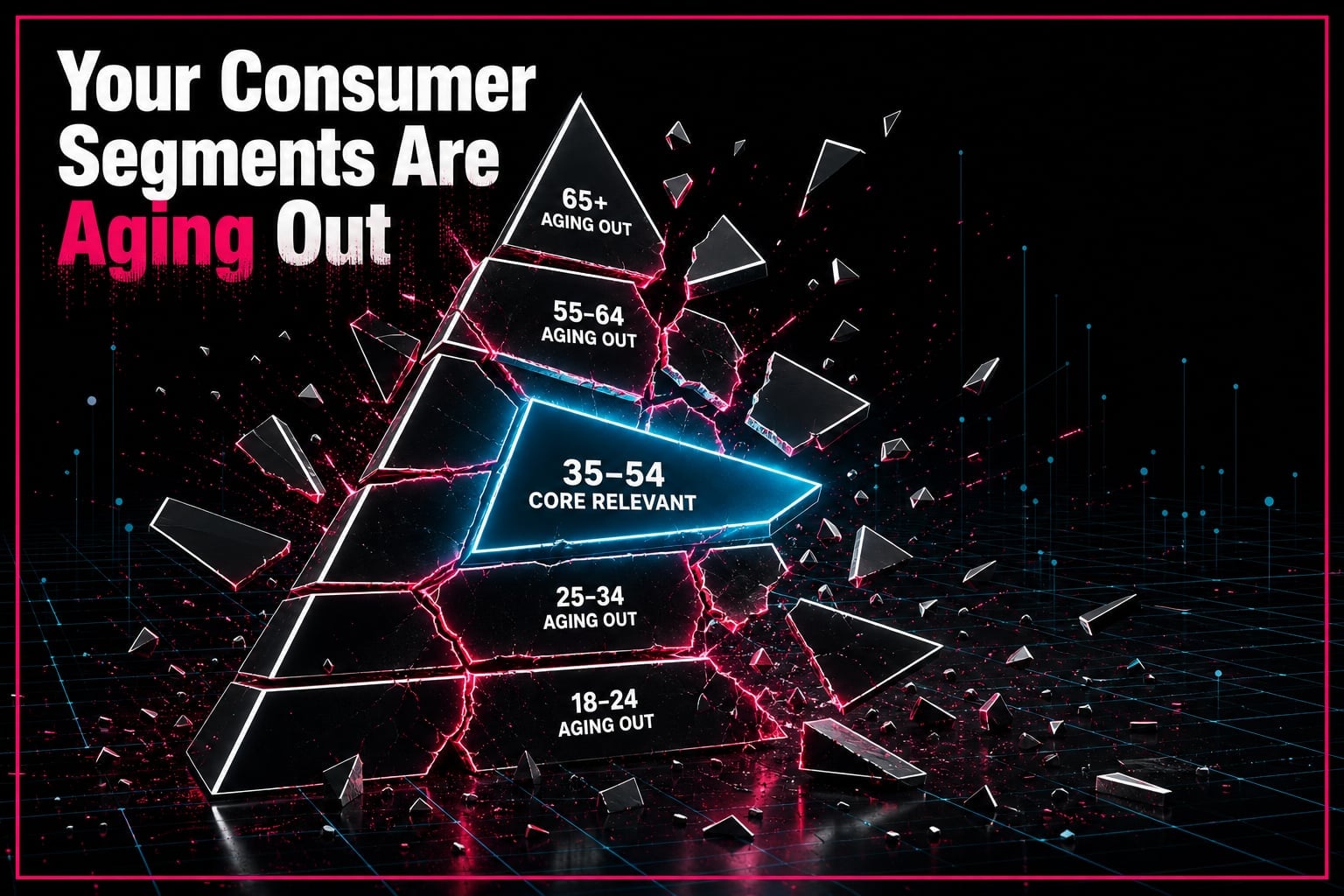
Why Your Age-Based Audience Segments Are Aging Out of Relevance
Consumer segmentation built on age brackets is quietly lying to you. It assumes a 30-year-old just bought a house, got married, and had a kid, but fewer than 25% of 25 to 34-year-olds hit all four classic adulthood milestones in 2024, down from nearly half in 1975, according to the U.S. Census Bureau. If your segments still assume that timeline, you’re targeting a consumer who barely exists.
Key Takeaways
- Less than 25% of 25 to 34-year-olds hit all four adulthood milestones in 2024, down from nearly half in 1975, per the Census Bureau, so age-bracket segments are guessing wrong most of the time.
- 76% of marketers already use some form of segmentation, per Marketing LTB’s 2025 report, but most are still segmenting by the wrong variable: age instead of behavior.
- Gen Z isn’t skipping milestones, they’re reordering them, which means the purchase trigger moved, not disappeared.
- Three lenses replace the broken model: behavioral readiness, identity aspiration, and event proximity.
Why Age Brackets Break When Life Milestones Stop Lining Up
Age-bracket segmentation assumes a fixed sequence of life events tied to birth year, so it groups a 28-year-old renter with a 28-year-old homeowner and expects both to behave the same way. That assumption just collapsed.
In 1975, 45% of 25 to 34-year-olds had moved out, married, worked, and had kids all at once. In 2024, that number sits below 25%, per the Census Bureau. That’s not a slow drift. That’s the input variable for half the segmentation models in your CDP going stale in one generation.
Here’s the mechanical problem. Lifecycle segmentation treats age as a proxy for need state. Remove the predictable milestone sequence and age stops predicting anything. You end up targeting “new homeowners” and “new parents” as if they cluster by birthday, when they now scatter across a 15-year window. We’ve written before about the lifecycle assumptions that are quietly killing your results, and this is the biggest one nobody wants to audit, because it’s baked into every segmentation tool your team already owns.
You’re probably still running “family formation” campaigns keyed to age 28 to 34. Stop. That range now includes renters, new parents, DINKs, and people who moved back in with their parents, all overlapping. One age bracket, four completely different consumers.
What Gen Z’s Reordered Milestones Really Tell Marketers
Gen Z isn’t failing to reach adulthood milestones, they’re reordering them, and that reorder shifts which categories they engage with and when. The old model reads delay as absence. The real story is displacement, and displacement is trackable if you know where to look.
Think about what that reorder actually does to a media plan. A 26-year-old renting solo, financially independent, and dating seriously doesn’t fit “pre-family” or “family formation.” They fit both, at once, for categories from furniture to fintech to fertility apps.
The rebuttal to “they’re just poor and delayed” is simpler than it sounds: the milestone sequence itself changed, not just the timing. Career and financial independence now often precede relationship and housing decisions, reversing the old order marketers built funnels around. That reversal is a weak signal, and weak signals are exactly what separates marketers who adapt early from everyone reading the trend piece a year late. We cover how to catch these shifts in reading weak signals before the trend goes mainstream.
There’s also a bias trap hiding here. Marketers anchor on the milestone sequence they personally lived through, then build audiences that assume everyone follows it. That’s confirmation bias wearing a segmentation model’s clothes, and it’s a pattern worth studying in the cognitive bias playbook that beats a bigger marketing budget. Fix the anchor, and the trigger becomes obvious: track what just changed in someone’s life, not how old they are.
Three Segmentation Lenses Built for a World Without Fixed Milestones
Replace the age bracket with three overlapping lenses: behavioral readiness, identity aspiration, and event proximity. Where age-based models guess at a life stage, these three read actual signals, and actual signals convert.
Behavioral readiness tracks what someone is actively doing right now: comparing mortgage calculators, saving in a specific account type, researching car seats. It doesn’t care how old they are or whether they’re married. Segmented campaigns built on behavior instead of demographics see up to a 760% increase in revenue, according to Salesgenie. That’s the gap between guessing and watching.
Identity aspiration groups people by who they’re trying to become, not who they are on paper. A 24-year-old chasing “financially independent adult” status behaves like a 34-year-old chasing the same identity, even though a birth-year bracket would separate them completely.
Event proximity flags which trigger just fired or is about to: a lease ending, a job change, a breakup. This is the closest replacement for the old milestone model, except it fires on real-time signals instead of assumed age windows.
Building this takes a different kind of thinking than running the old funnel harder. It’s the same shift we describe in the decision-making shift that turns marketers into strategists, and skipping it is exactly why so many teams stay stuck doing more of what isn’t working, a trap we break down in why executional marketers stay stuck. coolest.marketing lays out frameworks like this one for marketers rebuilding their targeting from the ground up.
Want to see how sharper segmentation thinking changes your targeting decisions? Explore the frameworks that move marketers from lifecycle assumptions to real behavioral clarity.