The Thrift-Obsessed Generation Is Quietly Rewriting What Luxury Means
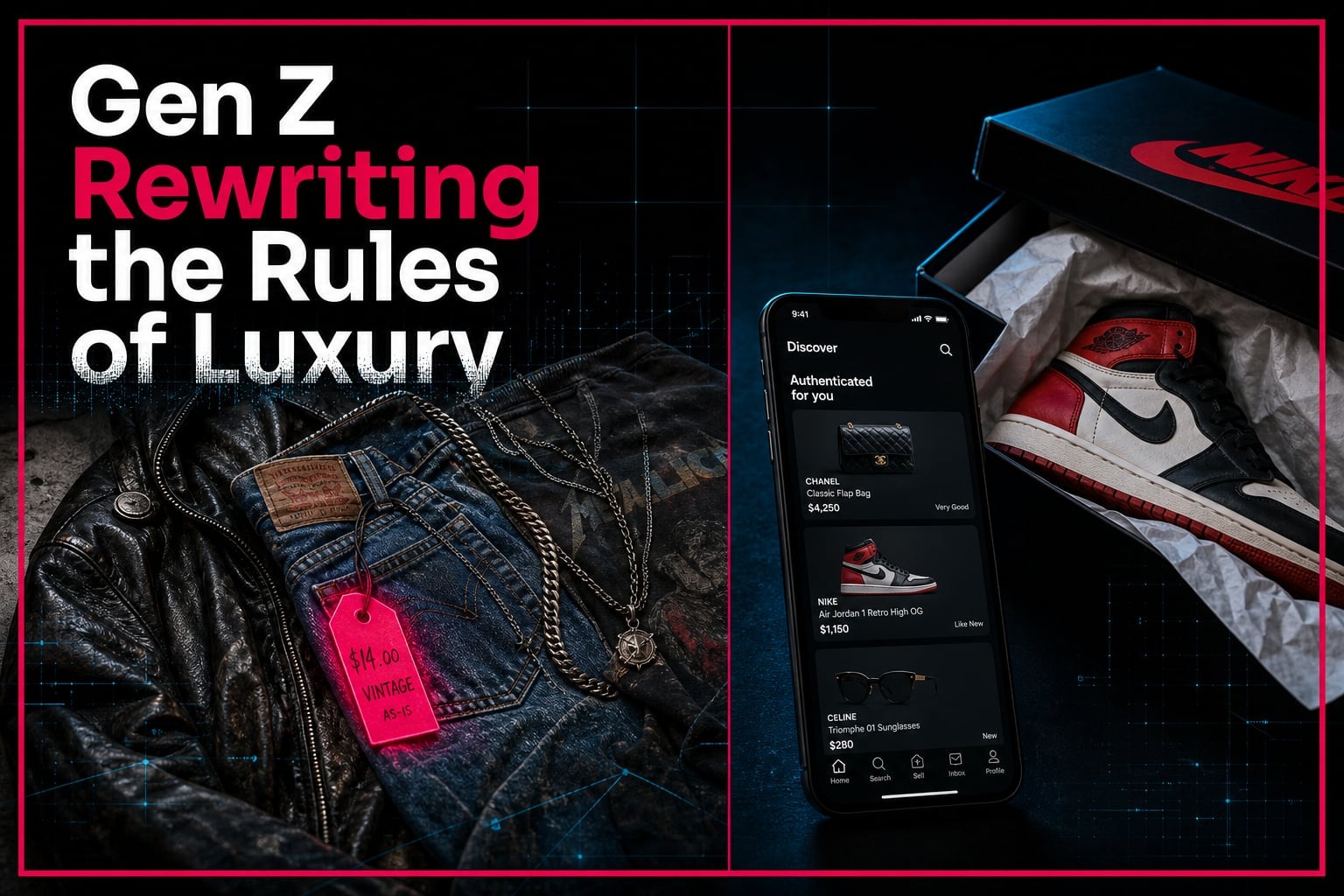
Gen Z thrift shopping isn’t the opposite of luxury spending. It’s the same instinct wearing two different outfits. This generation shopped secondhand at massive rates last year, per NBC News‘s reporting on ThredUp’s data, while also becoming a real force in luxury spend. Marketers who see a contradiction are already misreading the assignment.
Key Takeaways
- 62% of Gen Z shopped secondhand last year, and it wasn’t about desperation. It was identity, per NBC News.
- The global luxury market is forecast to hit $470.69 billion by 2034, and Gen Z helps carry it there, per Fortune Business Insights.
- Of luxury shoppers who bought a luxury style item last year, 63% were Gen Z, per Fashion Dive.
- Thrifting and splurging aren’t rival budgets. They’re the same values-driven wallet, spent two different ways.
What Gen Z Is Really Chasing When They Hit the Thrift Racks
Gen Z thrift shopping is a search for identity and values, not a hunt for a discount. It just happens to also save money.
Here’s the number that should stop you mid-scroll: 62% of Gen Z shopped secondhand last year, according to ThredUp data reported by NBC News. That’s not a niche behavior. That’s the majority.
But price is only part of the story. Research on Gen Z’s second-hand shopping habits found that in-store experience and identity expression drive the decision as much as budget does, per the Harantová et al. study. Thrifting is treasure hunting with a moral upside.
You’re watching a generation reject sameness. Retail Brew found nearly a quarter of Gen Z thrift or DIY their home decor, and many blend secondhand into everyday style precisely because it lets them look like nobody else.
Here’s the tension marketers keep missing: this isn’t anti-consumption. It’s pro-meaning consumption. Gen Z will pay full price for something that says who they are, and pay nothing for something that says the same thing better. The dollar amount was never the point. The story attached to the object always was.
That reframes the whole category. If identity is the currency, then “cheap” and “luxury” stop being opposites. They’re just two prices for the same feeling.
Why the Luxury Market Is Bending Toward the Same Values
Luxury market trends now show growth and secondhand demand rising together, not against each other. The global luxury goods market is projected to reach $470.69 billion by 2034, per Fortune Business Insights, and Gen Z isn’t sitting this one out.
Flip open any luxury earnings call and you’ll find Gen Z isn’t a footnote anymore. Among shoppers who made a luxury style purchase last year, 63% were Gen Z, according to a Dotdash Meredith and Ipsos survey covered by Fashion Dive. That same report found this cohort values the experience of luxury as much as the object itself.
Here’s the framework worth stealing: think of luxury demand as two rivers feeding one lake. River one is resale, where a scuffed vintage bag becomes a personality statement. River two is new luxury purchases, chosen for the story a brand tells, not the logo it stamps.
Both rivers are fed by the same source: a generation deciding that meaning beats markup. McKinsey’s research on the state of luxury frames this shift as evolving client expectations, not shrinking demand. Resale platforms and luxury boutiques are increasingly selling to the same person, in the same week, for the same reason.
Treating thrift and luxury as separate markets means missing half your own customer.
The Move Marketers Need to Make Before This Shift Leaves Them Behind
Marketers who split Gen Z audiences into “thrift shoppers” and “luxury shoppers” are building strategy on a line that doesn’t exist. The real divide is between brands that earn trust and brands that assume it.
You’ve probably built messaging around price tiers or heritage storytelling. Here’s the pushback: neither wins Gen Z on its own anymore. What wins is proof of values, delivered consistently, whether the price is $8 or $8,000.
Gen Z does not reject luxury; it rejects empty luxury. Gen Z does not want perfect brands; it wants honest ones.
That’s the framing from Forbes‘s coverage of luxury’s Gen Z challenge, and it should reset how you brief every campaign this year.
Three moves follow from that. First, stop separating your resale strategy from your brand strategy: treat secondhand demand as a signal of desire, not a leak in your funnel. Second, sell the experience, not just the object. EHL Insights found Gen Z increasingly treats luxury as a tool for self-expression and status is migrating from ownership to narrative.
Third, retire the assumption that aspiration means “unreachable.” For this generation, aspiration means “aligned.” A brand that’s transparent about sourcing and generous about access earns more loyalty than one that’s simply expensive.
The category is already rewriting itself. The only question is whether your messaging catches up before your competitors do.
If this reframe changed how you think about your next campaign brief, we’d genuinely love to hear your take. What are you seeing in your own data?