How to Choose MVP Features Without Overbuilding Your First Product
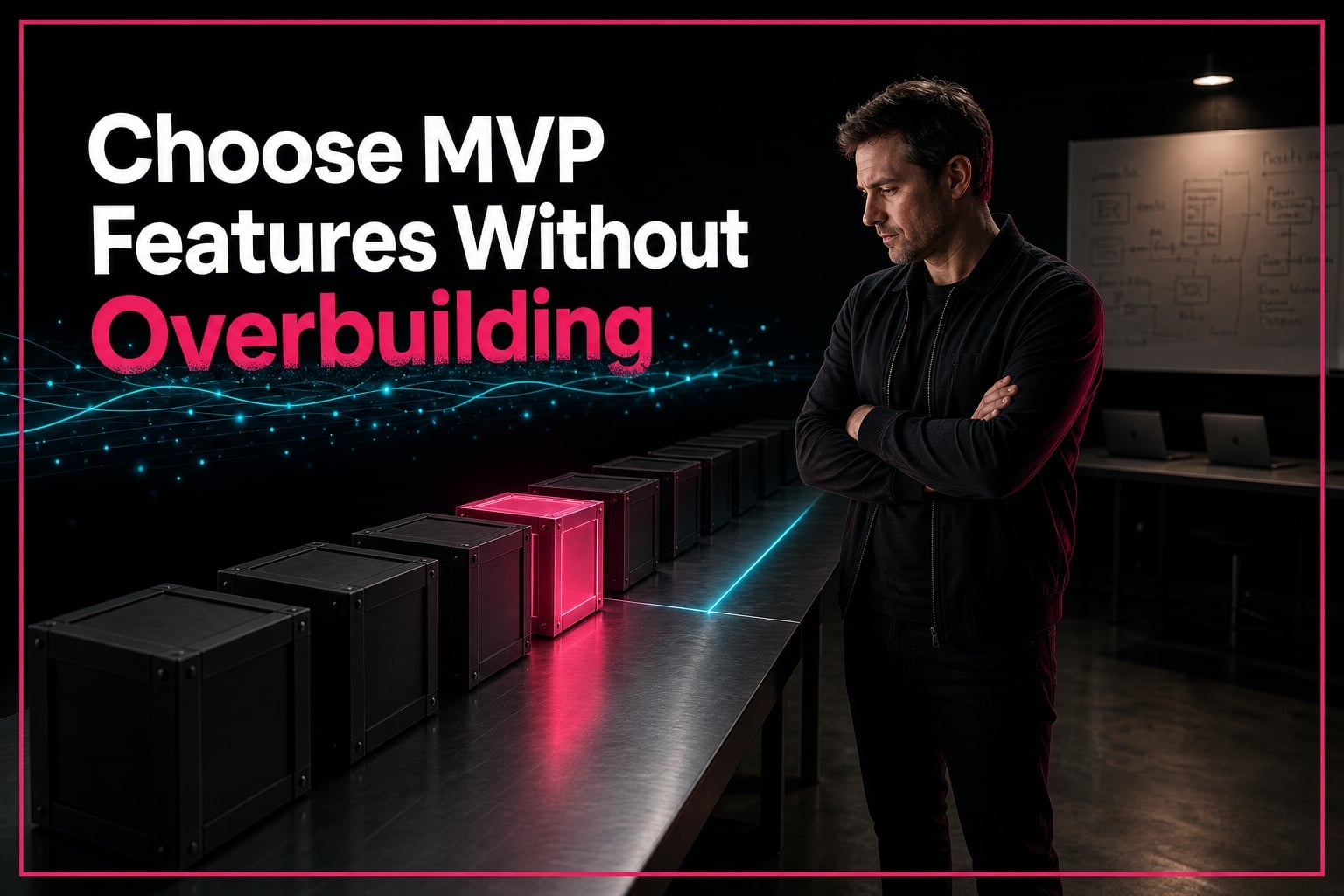
To choose MVP features, rank each candidate Critical, Important, Nice-to-Have or Can Wait against one named user problem, then ship only the Critical tier. AI tools write code in hours now. That makes overbuilding the cheapest mistake you can make.
Key Takeaways
- Ship only the Critical tier. Everything else waits until a real user asks for it.
- 42% of failed startups never took off because they misread market needs (Adam Fard). Name the problem before any feature.
- Single-feature scoping and a forced four-tier ranking fit solo founders. RICE needs usage data you do not have yet.
- A tight MVP tied to demand proof reads as discipline. Test your cut line with an outside expert before you build.
What Features Should an MVP Have? Start With One Problem and a Four-Tier Ranking
An MVP should include only the features a first user needs to solve one named problem. Rank each candidate Critical, Important, Nice-to-Have or Can Wait, and ship the Critical tier.
Picture this. It is 11 p.m., your AI assistant just generated a dashboard, a referral system and dark mode. Nobody asked for any of them. You have talked to zero users about them.
Start with numbers, not feelings. How many people are waiting? How many interviews have you held? How many days will the build take? Greensighter suggests 20+ user interviews before you pick features. If you have held two, say so.
Then write the problem in one sentence. What exact pain does it name, and how many people have told you they feel it? Rank every feature against it. No ties allowed.
| Area |
Their Rating |
Notes |
| Core action that solves the problem |
Critical |
Ship it |
| Email login |
Important |
Use a ready-made service |
| Referral system |
Nice-to-Have |
Needs users first |
| Dark mode |
Can Wait |
Zero interviews mention it |
Everything under the cut line stays unbuilt. Adam Fard reports that 42% of failed businesses never took off because they misunderstood market needs. Features cannot fix that. One sharp problem can.
Which Prioritization Method Fits a Solo Founder? A Side-by-Side Comparison
Single-feature scoping and a forced four-tier ranking suit solo founders best, since they need no user data at scale. RICE and weighted scoring pay off only once real usage numbers exist.
Most guides hand you five methods and stop. In our experience, you do not need five. You need the one that works with what you have today.
| Method |
Speed |
Data needed |
Solo founder fit |
| Four-tier ranking |
Under an hour |
One problem, a few interviews |
High |
| Single-feature MVP |
Fastest |
One validated pain |
High |
| MoSCoW |
Fast |
Low |
Medium: “Should” tends to swell |
| Impact-effort |
Medium |
Guesses on both axes |
Medium |
| RICE |
Slow |
Reach and usage figures |
Low until you have users |
Scoring models fail early because you are scoring guesses. A guess multiplied by a guess is still a guess. The four-tier ranking works because it forces a hard answer: does this feature solve the named problem, yes or no?
Watch for how group pressure inflates scope. Even alone, you feel it from friends, forums and your own AI chat. And remember why more options can hurt the people choosing: your first users will drown in a crowded product too.
Discipline pays. A cybersecurity firm using Aha! cut feature build volume by 30% and improved its risk posture, according to TTPSC.
Not sure your cut line holds? Ask yourself: which Critical feature could a first user live without, and how many users have you asked?
Will a Smaller MVP Hurt With Investors, and Where Can You Get a Second Opinion?
A tight MVP tied to proof of demand reads as discipline to investors. Founders can pressure-test their cut line with an outside expert before building.
You may worry that fewer features look weak. Flip it. Investors hunt for reasons to say no. A bloated product with no users hands them one. A small product with a waiting list answers the real question: is the risk lower?
Frame your pitch around risk removed, not screens built. Show the problem, the interviews, the Critical feature and the number of people who used it. Early traction beats a long feature list, though you should check signals that look like traction but are not before you present them.
The evidence leans your way. Startups that begin with an MVP are 70% more likely to succeed, according to Enacton’s roundup of Zackriya data. After launch, practice reading early user signals fast and promote one Important feature at a time.
Now compare your options for a second opinion. Talk to a founder friend. Or join a workshop to hear how operators scope. coolest.marketing offers workshops and courses and advisory sessions with entrepreneurship experts, covering strategy through product, vibe-coding, finance and law.