Why the Future of Learning is Ecosystems, Not Just Courses
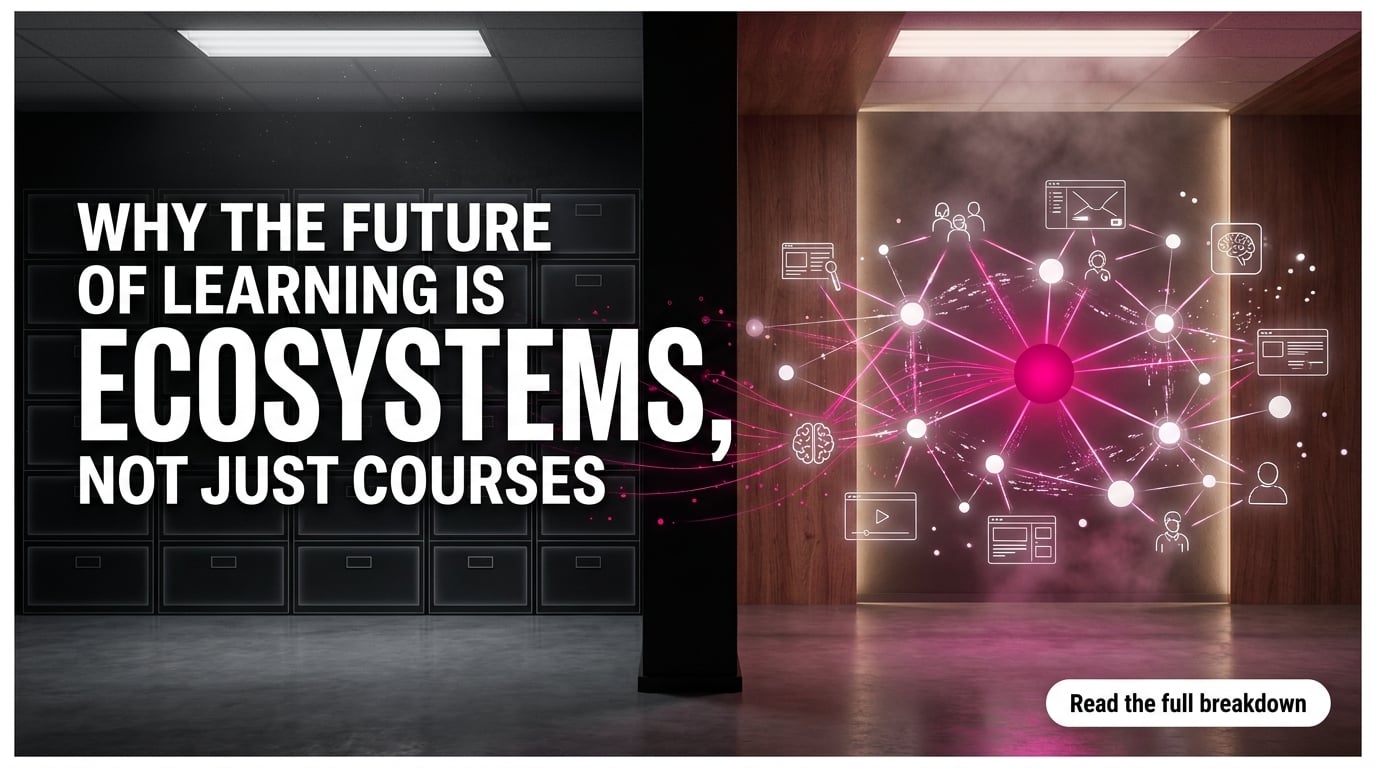
The future of learning is not a better course. It is a connected system where content, people, and tools work together so you actually change what you do, not just what you know. Most platforms have not figured this out yet. Here is what that gap is costing you.
Quick Answer: What Is the Future of Learning?
The future of learning is a shift from isolated content consumption toward interconnected ecosystems that combine courses, expert access, community, and AI support in one continuous experience.
You have probably bought a course and finished it feeling pumped, then changed nothing by Tuesday. That is not a willpower problem. It is a design problem. Static content was never built to change behavior.
According to the World Economic Forum, AI is already reshaping Education 4.0 by enabling personalized, ongoing learning rather than one-time delivery. The course-as-product model is a relic of a pre-connected world.
How Do Learning Ecosystems Go Beyond Online Courses?
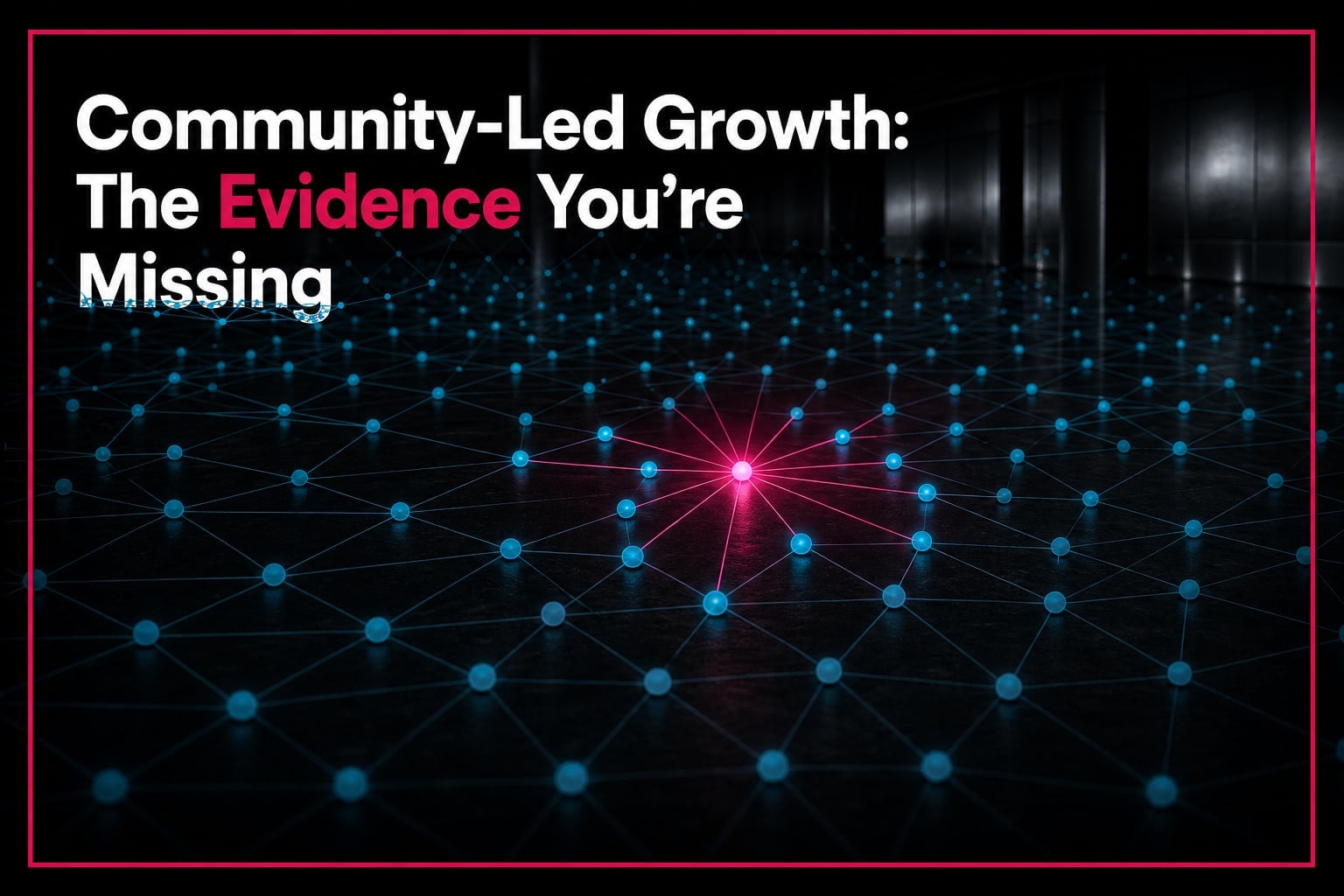
A learning ecosystem is a dynamic network of content, people, technology, and culture that supports continuous growth, as defined by KnowledgeWorks.
A course gives you information. An ecosystem gives you a place to use it. The difference is not cosmetic. One ends when you click the final video. The other keeps working after you close your laptop.
UNESCO’s framework on learning ecosystems emphasizes interconnectivity across a lifetime, not just a syllabus. That is the operating principle most course platforms completely ignore.
What Makes an Ecosystem More Effective Than a Course Library?
A course library is a collection of passive content with no connective tissue between lessons, instructors, or learners.
Completion rates on standalone online courses sit below 15%, according to research cited by the Future of Learning Lab at Cornell University. An ecosystem flips that by building accountability and relationships directly into the structure.
Think about it this way. A library gives you books. An ecosystem gives you a mentor, a peer group, a practice environment, and a tool that answers your questions at 11pm. The library is passive. The ecosystem is alive.
coolest.marketing’s approach reflects this directly: courses extend into 1:1 consulting sessions, group workshops, and instructor-led subscriptions, so learning never stops at the last lesson.
How Direct Access, Community, and AI Drive Deeper Learning in the Future of Learning
Direct access learning means learners can reach real experts between sessions, not just consume pre-recorded answers to questions they have not asked yet.
Community compounds this. Peers catch blind spots that instructors miss. They share what actually worked in their specific context. That kind of lateral knowledge transfer does not exist in a solo course experience.
AI closes the loop. The U.S. Department of Education’s 2023 AI report found that AI-enabled personalization can meaningfully improve learning outcomes by adapting to individual pace and gaps. An AI assistant trained on a specific instructor’s methodology delivers that personalization at scale, not just for the students who can afford 1:1 time.
Candace Thille, Professor of Education at Stanford University, speaking to Stanford Engineering: Human educators and AI-enabled assistants working together will help students learn faster and better than either could achieve alone.
Case Study: From Passive Students to Active Operators
Moving from passive student to active operator means applying frameworks in real decisions, not just recalling concepts on a quiz.
The Association for Talent Development identifies five ecosystem building blocks: people, content, technology, data, and governance. Platforms that implement all five see measurably stronger learner retention and application rates than those running content alone.
coolest.marketing’s model pairs each instructor with a custom AI assistant that reflects their specific thinking and methodology. Learners get expert-level guidance between live sessions, and instructors scale their impact without cloning themselves.
Key Takeaways: Why Ecosystems Win the Future of Learning
Learning ecosystems outperform course libraries because they replace one-time transactions with continuous relationships, passive viewing with active application, and anonymous content with real expert access.
- Courses inform. Ecosystems transform.
- Community creates accountability that solo learning never can.
- AI scales personal attention without replacing human expertise.
- Ongoing access beats one-time delivery every time behavior change is the goal.
Your next step is concrete: audit whatever learning tool you use today. Does it connect you to real people after the lesson ends? If the answer is no, you are paying for information you will not use.