The Lone Genius Myth Marketing Gets Wrong: Why Your Best Campaigns Are Never a Solo Act
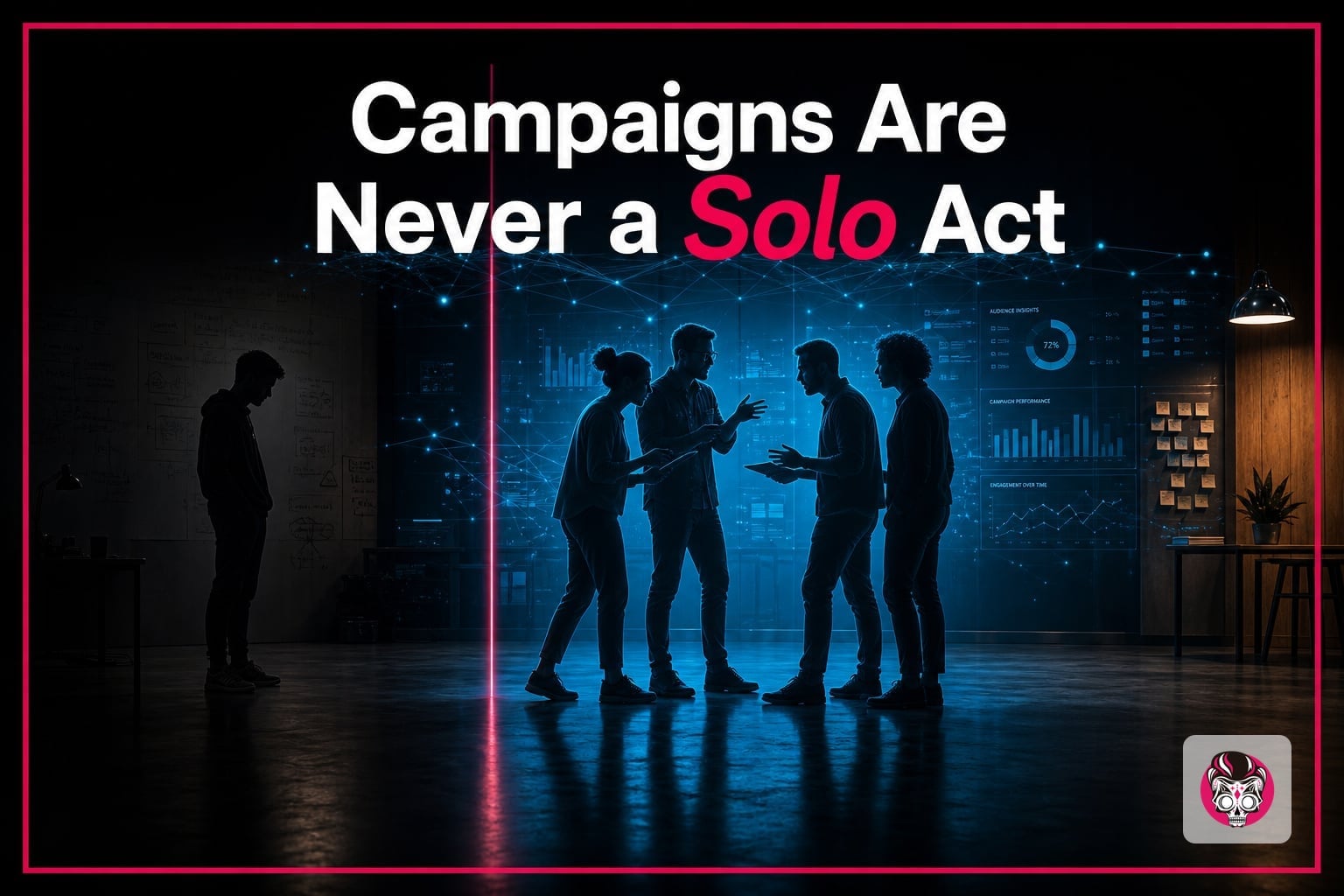
The lone genius myth marketing loves to tell is simple: one brilliant mind, one breakthrough idea, one hero who saves the quarter. It is also completely wrong. Every celebrated “solo” campaign was built by a team. Every founder who bet the budget on a single star hire paid for it later. The fix is a system, not a superstar.
Key Takeaways
- The lone genius myth is a strategic liability in marketing, not just a historical inaccuracy.
- Collaborative teams produce up to 35% more creative output than solo operators.
- The Operator Thinking loop (Listen, Co-Create, Iterate) replaces hero dependency with a repeatable system.
- Community co-creation, as proven by Lego Ideas, generates loyalty no internal genius can match.
Why the Lone Genius Myth Marketing Tells Hits Founders Hardest
The lone genius myth in marketing is the belief that one visionary hire or star strategist drives campaign success, when in reality every celebrated breakthrough was built on collaborative systems and team input.
Marketing mythology over-indexes on individual visionaries. Every celebrated solo campaign was built by a team. Mistaking the myth for reality costs founders real budget.
Here is the contrast that stings: science has largely moved past the lone genius story. BBC Future notes that genuine scientific progress is usually collaborative, even if fame singles out individuals. Marketing has not caught up. Founders still hire one “growth genius” and wait for magic.
The result? Campaigns that collapse the moment that person leaves. No institutional knowledge. No repeatable process. Just a hole in the budget.
Tech Crates points out that the lone genius myth also hinders diversity in leadership, because attributing success to one individual ignores the systemic advantages, mentorship, and team support that actually drive results.
Diverse, collaborative marketing teams can ramp up creativity by up to 35%, per Loomly’s research on marketing teamwork benefits. You cannot get that from one hire, no matter how brilliant.
The Operator Thinking Framework: How the Lone Genius Myth Marketing Ignores Repeatable Systems
Operator thinking in marketing is a repeatable loop where teams listen to real signals, co-create across functions, and iterate fast on community feedback, replacing the unpredictable “genius spark” with a system anyone can run.
So the myth fails. What do you actually do instead? Picture this: your last campaign flopped. You blame the brief. Your star hire blames the creative. Nobody has data because nobody built a feedback loop. That is the lone genius model in action.
The Operator Thinking loop fixes it in three steps:
The 3-Step Operator Thinking Loop
- Listen: Pull real signals from customers, sales calls, and community channels before a single brief is written.
- Co-Create: Build the campaign across functions: copy, design, data, and customer success all in the room.
- Iterate: Ship fast, measure, and feed results back into step one. No hero required.
Teams that use structured briefs and debriefs are 20-25% more productive than those that skip them, per Loomly. That is the operator loop working. coolest.marketing’s approach to marketing education for founders is built around exactly this kind of operator-first, system-driven thinking.
Acquia’s collaborative marketing research confirms that cross-functional campaigns consistently expand reach and results beyond what any single strategist can achieve alone.
Community as Co-Creator: Turning Your Audience Into Your Best Marketing Asset
Community co-creation is the practice of inviting your audience to actively shape campaigns, products, and content, transforming them from passive targets into genuine contributors who drive loyalty and growth.
When you treat your audience as participants rather than targets, they generate better ideas, stronger content, and deeper loyalty than any single internal genius ever could.
The proof is Lego Ideas. Lego built a platform where fans submit product designs, vote on favorites, and winning designs become real products, credited to the creator. The result is not just a clever campaign. It is an ongoing engine of loyalty, content, and trust that no internal team could manufacture alone.
Brands like Lego, which co-create with customers, have redefined the marketer-consumer relationship to be collaborative rather than one-sided. Every bold move must reflect your values and respect your audience’s intelligence.
Cody Plofker, Chief Marketing Officer at Jones Road Beauty, speaking on the Marketing Operators podcast, 2024
This is also an ethical question. Listening to your community is not a tactic. It is respect. Exploiting their ideas without credit or dialogue is the dark side of community marketing, and audiences notice fast.
According to Marketing Eye, teams that work well together are five times more likely to be high performing, with higher levels of innovation and creativity. That multiplier applies to your community too. coolest.marketing’s frameworks for community-driven campaigns give founders the tools to build this kind of dialogue at scale, not just replicate it once.
Lone Genius Model vs. Collaborative Operator Model
| Dimension |
Lone Genius |
Collaborative Operator |
| Inputs |
One person’s intuition |
Team signals + community data |
| Outputs |
Inconsistent, person-dependent |
Repeatable, scalable campaigns |
| Failure mode |
Key person leaves, system collapses |
Process survives team changes |
Your Next Move
Stop auditing your star hire. Audit your system. Map your last three campaigns: where did the ideas come from, who was in the room, and what feedback loop closed the cycle? If the answer is “one person” twice or more, you have a lone genius dependency, not a marketing function.
See how a collaborative marketing system reaches results your solo strategy never could: explore the operator frameworks inside Coolest.Marketing.