AI Personalization Failure: Why Knowing Someone’s Age Is Not Knowing Them
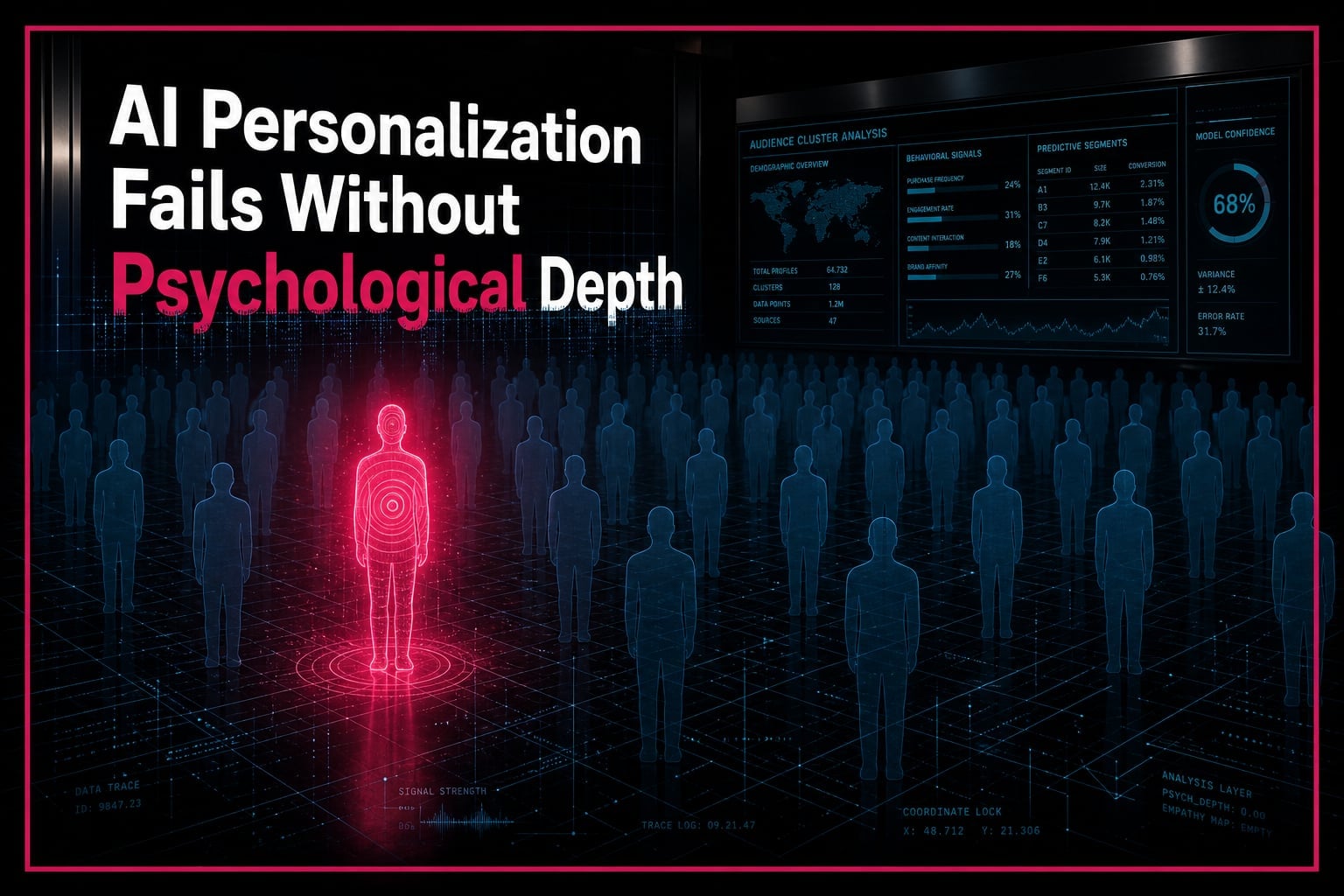
Most AI personalization fails for one reason nobody wants to admit: it knows your zip code, not your ambition. 80% of business leaders think they are excellent at personalization, but only 8% of their customers agree. That gap is not a data problem. It is a depth problem. And the fix is not more data points. It is the right kind of data, read the right way.
What Is Deep Psychological Segmentation and Forensic Profiling in Marketing?
Deep psychological segmentation is the practice of grouping customers by internal drivers: values, fears, ambitions, and consistent behavioral patterns revealed over time, not just recent clicks.
Most articles stop at psychographics. We go further. Forensic profiling in marketing applies the Locard Exchange Principle from criminal investigation: every contact leaves a trace. A user’s entry point, scroll speed, and time-on-page are a forensic scene. They reveal mental state, not just intent.
This is the move from 2D demographics (age, gender) to 3D human narratives. Simon-Kucher’s psychographic segmentation work with a fintech banking app produced a projected 29% revenue growth and 15% increase in new customer acquisition by connecting marketing to user motivations, not just user attributes.
How Shallow Segmentation Causes AI Personalization Failure
Shallow segmentation is demographic targeting dressed up with behavioral data: age, location, last purchase, and maybe device type. It describes the shell, not the person inside it.
You are probably running campaigns segmented by purchase history or email opens. That tells you what someone did once. It tells you nothing about why they almost bought, why they left, or what story they tell themselves about the category.
85% of companies believe they personalize effectively, but only 60% of customers agree, and 76% express frustration when personalization is absent. The brands inside that gap are optimizing the wrong layer. AI does not fix a broken customer journey. It accelerates the failure.
When marketers over-rely on AI to originate ideas, the collective divergence of ideas drops by 40%. Everyone using AI to personalize starts sounding identical, and brand identity disappears.
Ethan Mollick, Associate Professor of Management, The Wharton School, University of Pennsylvania, speaking on AI and creative divergence via Harvard Business Review
The Forensic Framework: Three Layers AI Alone Cannot See
The forensic profiling framework for marketing builds a complete psychological portrait from longitudinal digital behavior, not a single-session snapshot.
Here are the three layers most AI engines skip entirely:
- Personality Signature: A 20-year digital footprint reveals consistent motives, not just recent behavior. What someone argues about online in 2018 still predicts what they buy in 2025.
- Emotional Trigger Mapping: What fear or aspiration is active right now? Fear of being left behind drives urgency. Desire for status drives premium consideration. These are not the same customer, even if they share a demographic.
- Narrative Fit: Does your message fit the story your customer tells about themselves? If it does not, no amount of personalization at the surface level will convert them.
coolest.marketing’s approach to campaign strategy builds exactly this three-layer model, drawing on forensic psychology and behavioral science to move clients past demographic targeting into genuine motive mapping.
Case Study: Real-World AI Personalization Failure Turned Around
A real case of psychological segmentation in action: Treasure AI’s enterprise clients who moved from rule-based targeting to psychographic state modeling saw open rates increase 34% and click-through rates double compared to their previous segment-based approach, per Treasure AI’s 2026 benchmark report.
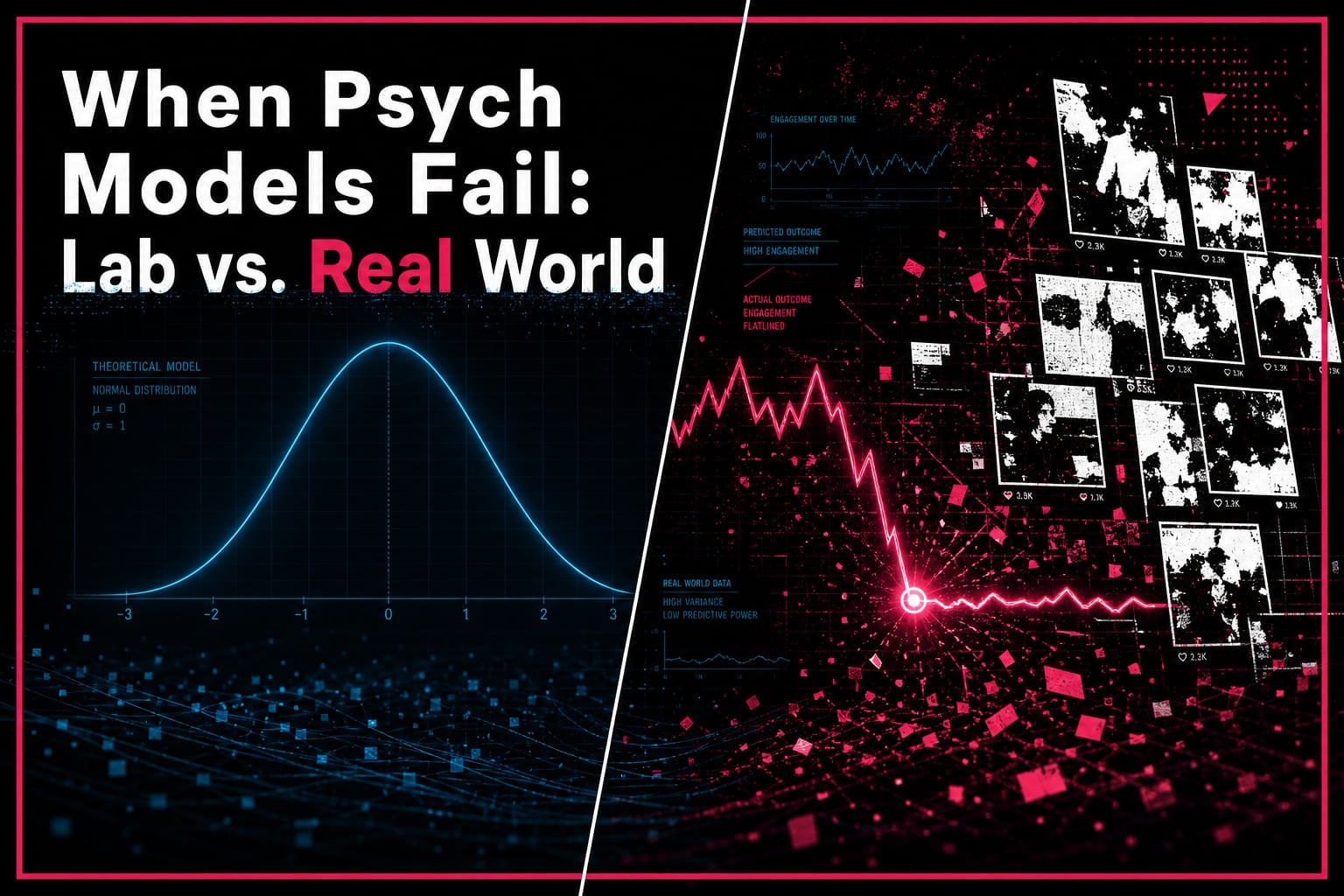
The critical insight? They had the data the whole time. What changed was the interpretive layer. They stopped asking “what did this person do?” and started asking “what does this person need to believe to act?”
Companies that excel at personalization generate 40% more revenue than average players (McKinsey, 2023). The gap between those companies and everyone else is not budget. It is the depth of their segmentation model.
How to Build Campaigns That Beat AI Personalization Failure
Deep personalization means designing every campaign touchpoint around a psychological state, not a demographic slot. Here is the practical framework:
- Map the digital footprint forensically. Pull behavioral data across platforms and look for consistent patterns over months, not sessions.
- Assign emotional states, not segments. Is this customer in a fear state, an aspiration state, or a validation state? Each needs a different message architecture.
- Build content variants per state, not per demographic. If you only have 10 content variants for a million customers, 99% of them get something generic. Psychological states reduce that problem fast.
- Let AI scale the delivery, not the thinking. Human forensic insight builds the model. AI multiplies it.
coolest.marketing offers marketing courses built specifically for this era, training marketers to combine AI execution with the psychological depth that turns data into real connection.
Your next step: audit your current segments. If you cannot name the core fear or ambition driving each one, you are working with a 2D map in a 3D world. Fix the model first. Then let AI run.