How to Use the 5 Narratives in Marketing, Negotiation & Business Growth
What Are the 5 Narratives and Why Do They Matter in Business?
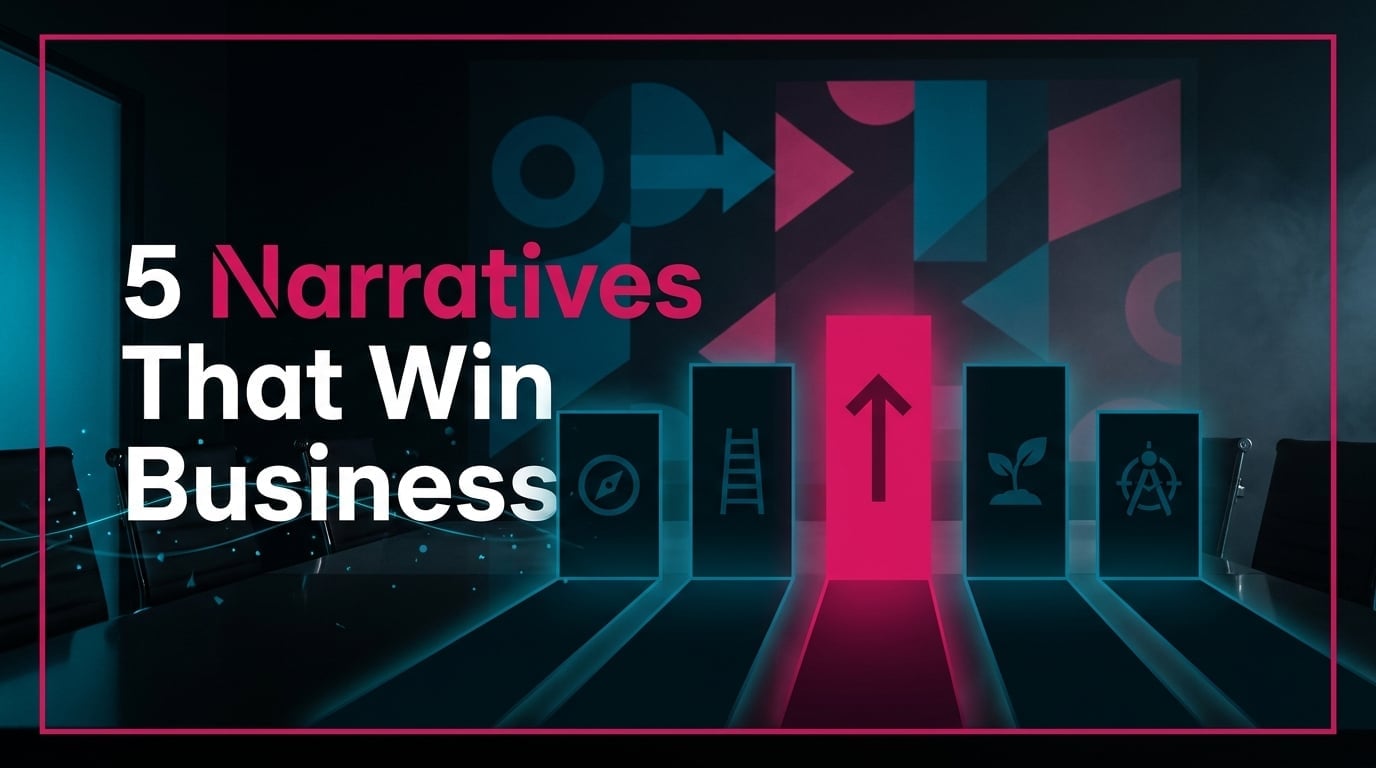
The 5 narratives are universal story structures, Overcoming the Monster, Rags to Riches, The Quest, Voyage and Return, and Rebirth, that map every human challenge, transformation, and triumph.
Here is what most marketing articles miss: these are not just story types. They are psychological triggers. People remember stories up to 22 times better than raw facts, according to research cited by negotiation expert Susie Tomenchok. That gap between forgettable data and sticky narrative is where business is won or lost.
Each narrative mirrors a desire your audience already carries. Your brand does not create that desire. It just has to show up in the right story at the right moment.
Karen Eber, CEO and Chief Storyteller at Eber Leadership Group, writing for her blog: “Your brain does not pay attention to boring things. Stories are how you make your message impossible to ignore.”
How Can the 5 Narratives Supercharge Your Marketing Strategy?
Using the 5 narratives in marketing means matching your campaign’s emotional core to the story structure your audience is already living inside their own head.
You are probably writing ads that describe your product. That is the wrong move. Harvard Business Review found that story-driven companies outperform competitors financially, precisely because they sell transformation, not features.
Here is how each narrative maps to a campaign type (You can dive deeper to marketing uses of these narratives on the “Commercial Profiler” Course):
-
Overcoming the Monster: Position your product as the weapon. Nike’s “Just Do It” frames self-doubt as the monster. The customer is the hero.
-
Rags to Riches: Show the before and after. Dove’s Real Beauty campaign built a billion-dollar brand by replacing the “flawed” narrative with a transformation story.
-
The Quest: Invite customers on a mission. Patagonia does not sell jackets. It recruits people into an environmental quest.
-
Voyage and Return: Spotify’s Wrapped campaign is a masterclass here. Users go on a year-long musical journey and return with a shareable identity.
-
Rebirth: Slack launched by reframing workplace email as a broken world. Slack was the rebirth, a fresh start for team communication.
coolest.marketing’s approach to narrative-based campaigns treats this framework as a practical build tool, not a theory exercise, which is especially relevant for marketers navigating the AI era where generic content is everywhere.
How Do the 5 Narratives Win Negotiations and Influence Decisions?
Negotiation storytelling is the use of structured narrative to shift a counterpart’s perspective, build trust, and move them toward a decision without pressure.
Most negotiators lead with data. Big mistake. Harvard’s Program on Negotiation found that compelling stories lead listeners to passively accept the storyteller’s arguments, a cognitive effect that raw numbers simply cannot replicate.
Match the narrative to the room:
-
Pitching a turnaround plan? Use Rebirth. Show the broken state, then your solution as the new chapter.
-
Asking for budget? Use Rags to Riches. Show where you started, the gap, and exactly where investment takes the team.
-
Closing a partnership? Use The Quest. Frame the shared goal as a mission neither side can complete alone.
ENS International notes that storytelling in negotiation builds empathy and reframes arguments in ways that logical appeals cannot. The narrative does the persuading so you do not have to push.
What Are Real-World Brand Examples for Each Narrative Type?
Real brand narrative examples are named campaigns where a company deliberately adopted one of the 5 narrative structures to drive measurable audience connection or business results.
Stop looking for inspiration in vague case studies. Here are five brands, one per narrative, that committed fully:
-
Overcoming the Monster: LinkedIn. The monster is a brutal job market. LinkedIn positions every profile as armor and every connection as ammunition.
-
Rags to Riches: Airbnb. Early hosts were broke people renting air mattresses. That origin story became the brand’s founding myth and drove trust in the platform.
-
The Quest: Red Bull. Red Bull does not sponsor athletes. It sponsors quests, extreme challenges that customers vicariously join through content.
-
Voyage and Return: Spotify Wrapped. Launched annually since 2016, Wrapped turned passive listening into a personal journey with a triumphant return moment every December.
-
Rebirth: Apple’s “Think Different” (1997). Apple did not just relaunch a product. It declared a new world order for creative thinkers and invited the audience to be reborn inside it.
Wordtune’s analysis of brand storytelling strategies highlights Dove and Patagonia as consistent narrative leaders precisely because they never break character from their chosen story structure.
How Can You Choose and Apply the Right Narrative for Growth?
Choosing the right narrative for business growth means auditing the emotional state your customer is in before they find you, then selecting the story structure that meets them there.
Ask one question: what does your customer fear or desire most right now? Fear of failure points to Overcoming the Monster. Desire for transformation points to Rags to Riches or Rebirth. Curiosity and ambition point to The Quest or Voyage and Return.
Then run this three-step check before any campaign or pitch:
-
Name the tension. What problem or desire is alive in your audience today?
-
Pick the narrative. Which of the 5 structures mirrors that tension most closely?
-
Cast your brand correctly. You are never the hero. You are the guide, the tool, or the portal that makes the hero’s journey possible.
coolest.marketing offers courses that walk marketers through exactly this casting process, practical training built for a world where AI writes the copy but humans still have to choose the story.
Quick Reference: Mapping Your Next Campaign or Pitch to a 5 Narratives Framework
A narrative mapping framework is a one-page decision tool that connects your audience’s core tension to the right story structure and the right call to action.
Karen Eber’s five essential business storytelling tips reinforce a simple truth: start with your audience, not your product. The narrative you choose must feel like their story, not yours.
Use this as your cheat sheet:
-
Overcoming the Monster: CTA: “Defeat the impossible with us.”
-
Rags to Riches: CTA: “We will help you transform.”
-
The Quest: CTA: “Join the journey to greatness.”
-
Voyage and Return: CTA: “Explore, learn, and grow with us.”
-
Rebirth: CTA: “Start fresh with our help.”
Pick your narrative before you write a single word of copy. Everything, the headline, the visuals, the offer, should serve that one story. That is how brands stop being products and start being stories people want to live inside.
Your next step: Take your current campaign brief and write one sentence answering: “What tension is my audience living in right now?” That answer tells you which of the 5 narratives you need. Start there.